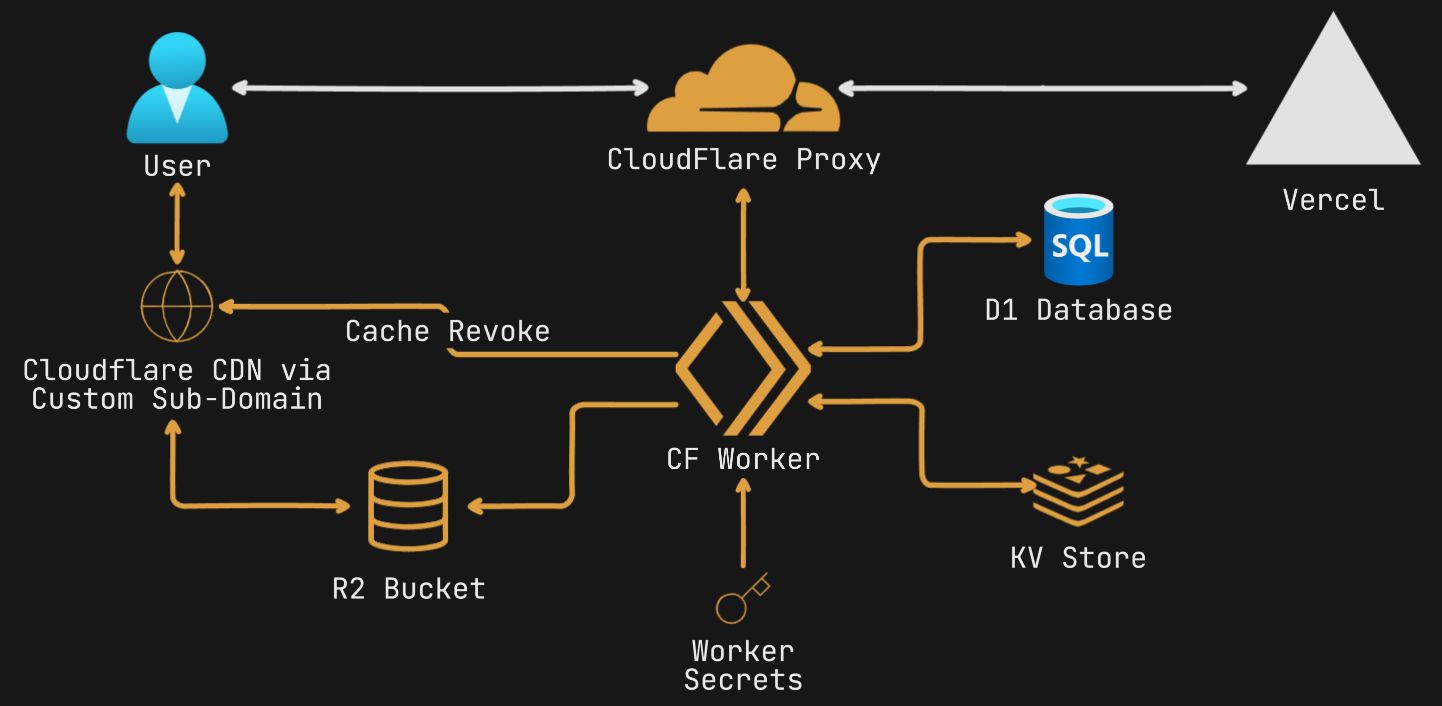
Modern edge computing and serverless architectures allow for the deployment of global products with near-zero infrastructure overhead and sub-50ms latency. This document outlines a production-ready stack designed for rapid scaling and high cost-efficiency.
High-Level Architecture
This recommended configuration leverages distributed edge nodes to handle logic and storage as close to the end-user as possible.
| Layer | Technology | Key Benefits |
|---|---|---|
| Compute | Cloudflare Workers | V8 isolates, globally distributed, zero cold starts. |
| Storage / DB | R2, D1, KV | Distributed object storage, SQL, and eventual consistency cache. |
| Network | Cloudflare CDN | Geo-distributed content delivery with custom domain support. |
| Frontend | Vercel | Optimized CI/CD and automated edge deployment. |
Technical Workflow
The following sequence describes the request-response lifecycle within an edge-native environment:
1. Request Routing
Incoming traffic is intercepted by the Cloudflare Global Anycast network. Requests are automatically routed to the nearest Point of Presence (PoP) to minimize Time to First Byte (TTFB).
2. Edge Logic Execution
Business logic is executed within Cloudflare Workers. These serverless functions run on V8 isolates rather than traditional containers, significantly reducing memory overhead and startup latency.
3. Distributed Data Access
- D1: Provides a managed SQL database for relational data.
- R2: S3-compatible object storage with zero egress fees.
- KV: Low-latency key-value store for session data and configuration.
4. Content Distribution and Caching
The CDN layer manages static asset delivery. Instant cache invalidation protocols ensure that global updates are reflected immediately across all edge nodes.
5. Frontend Orchestration
Vercel handles the frontend lifecycle, providing seamless integration with the edge backend via automated deployment pipelines.
6. Security and Resilience
The architecture includes native L3/L4 DDoS protection, a Web Application Firewall (WAF), and automated rate limiting, shifting security responsibilities to the network edge.
Strategic Advantages
Architectural Benefits
- Global Distribution: Code executes in 300+ locations by default.
- Operational Efficiency: Eliminates the need for server provisioning and manual scaling.
- Integrated Security: Hardened infrastructure with out-of-the-box protection.
- Performance: Consistent sub-50ms response times globally.
Implementation Trade-offs
Engineers should consider the following constraints:
- Provider Lock-in: High dependency on the Cloudflare ecosystem and specific APIs.
- Debugging Complexity: Distributed environments can be more difficult to profile than local or monolithic setups.
Assessment: The benefits of rapid deployment and automatic global scaling typically outweigh the trade-offs for startups and modern distributed applications.
Conclusion
Edge-native architectures represent a shift toward high-performance, low-maintenance infrastructure. By removing server management from the development lifecycle, teams can focus exclusively on product logic and system design.
For further exploration, refer to the Cloudflare Workers documentation and Vercel’s deployment guides.